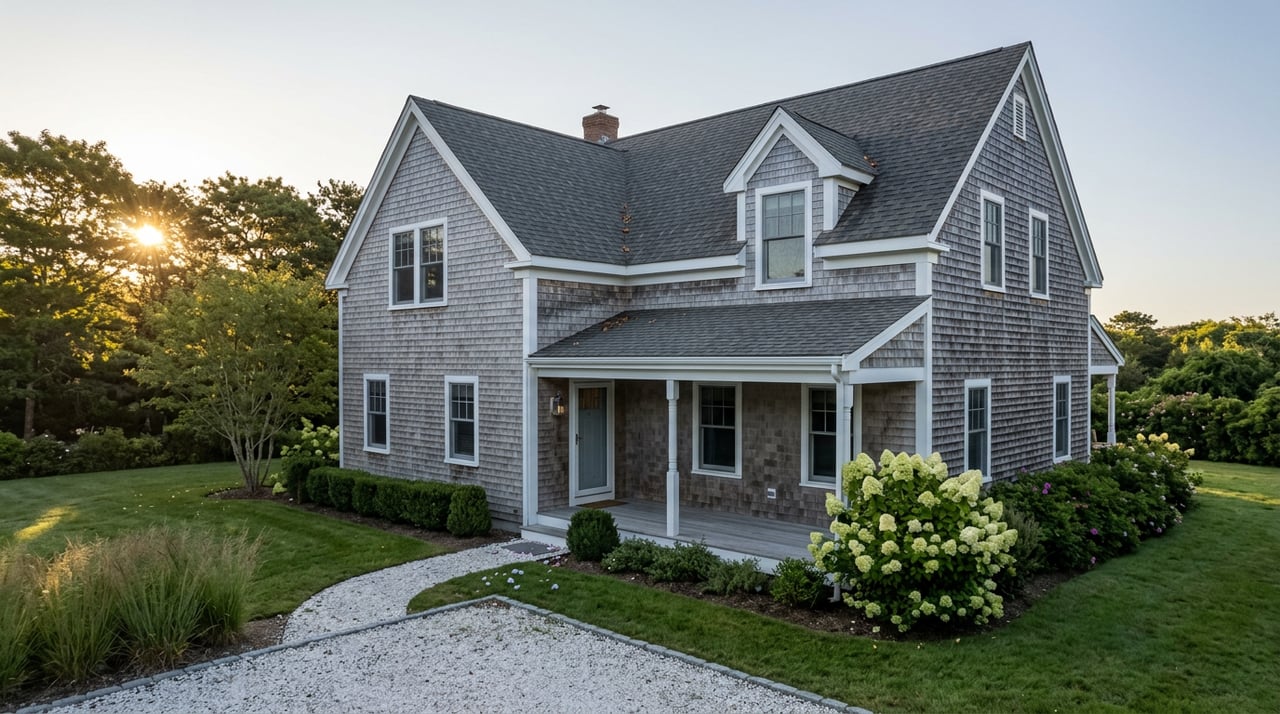
Harwich Was Named Massachusetts' Hottest Housing Market. Here's the Number the Ranking Left Out.
September 10, 2026
September 10, 2026
Buyers who put a rebuilt Harwich cottage under agreement are increasingly running into a wall most people don't expect until it's too late: the appraiser can't find a clean comparable sale. A modest seasonal cottage gets torn down and replaced with a three-story custom home on the same quarter-acre lot, and nothing else on that street looks like it yet. When the comps come back thin, the appraisal can land below the purchase price, shrinking the loan and forcing the buyer to bridge the gap in cash or walk.
That scenario is becoming more common in Harwich, and it's tied directly to the same trend that just made the town famous. In the second quarter of 2026, the Boston Business Journal ranked Harwich as Massachusetts' hottest housing market and the 15th hottest in the country, based on sales activity in the 02645 zip code, according to reporting in the Cape Cod Chronicle. That's a genuinely notable ranking. It's also a headline that describes an average, and in Harwich right now, the average is hiding two very different markets moving at two different speeds.
The Chronicle's reporting quoted Richard Waystack, chair of Harwich's board of assessors and a Keller Williams realtor, who put the dynamic in blunt terms.
"The market is simple, it's supply and demand, but there are only 27 single-family homes on the market in Harwich, and there is so much demand out there."
The average sale price in the Harwich zip code for that period came in at $1,112,314, up roughly $250,000 from the same quarter a year earlier. That's the number that earned the ranking. But Waystack also described the market as split, differentiated between the $500,000 to $800,000 range and homes priced over $1 million, with almost nothing available at the lower end. For context, Barnstable County as a whole saw new listings rise 12 percent over the same period in 2025, sales volume up 8 percent, and a county-wide median sale price of $725,000, a modest 1.4 percent increase from $715,000 the year before. Harwich's average is running roughly $400,000 above the county median. That gap alone tells you the average isn't describing a typical Harwich sale. It's describing what happens when a thin slice of very expensive transactions pulls the number upward while the middle of the market barely has anything to sell.
Waystack pointed to a specific cause for the shortage at the accessible end: longtime owners staying in their homes longer because they don't want to trade a low mortgage rate for a new one at current rates. He noted that properties priced between $5 million and $6 million have been selling, but there's essentially no low-end housing on the market to replace what would normally turn over. That's not a story about demand outrunning supply everywhere. It's a story about one segment of owners who have every financial reason to stay put, while another segment, new construction and rebuilt properties at the top of the market, keeps trading and keeps pushing the average higher.
If you're comparing Harwich to a neighboring town using nothing but the headline average or median, you're comparing a number shaped by a supply freeze in the middle to whatever is happening at the top elsewhere. That's an unreliable way to judge whether a town is actually more expensive or just has a different mix of what's for sale.
Part of what makes a single Harwich number so misleading is that Harwich isn't really one market. It's seven villages: Harwich Port, Harwich Center, West Harwich, East Harwich, South Harwich, North Harwich, and Pleasant Lake, each with its own housing stock and its own reasons for existing.
Harwich Port carries the premium. Waterfront and near-waterfront properties there run $1.5 million and up, with converted cottages on side streets near the harbor typically landing between $1 million and $2 million. Proximity to Saquatucket, Allen, and Wychmere harbors adds further premium on top of that. The interior villages tell a different story. New construction inside recent mini-subdivisions runs $1 million to $1.8 million, while converted farmhouses and wooded lots range from $600,000 to $1.2 million depending on condition and how close the lot sits to Route 28 or water. Harwich Center, the town's walkable historic core, sits in between at roughly $700,000 to $1 million, with more stable pricing and a higher share of owner-occupied homes than the more speculative Harwich Port market.
That spread means a buyer with a $700,000 budget isn't priced out of Harwich. They're priced out of Harwich Port. The same budget can still work in Harwich Center or in the interior villages, but only if the search starts at the village level instead of the town level.
This confusion isn't limited to price. Harwich and Harwich Port are two different things, and buyers unfamiliar with the Cape often use the names interchangeably when searching listings or asking questions. Harwich is the town, made up of all seven villages. Harwich Port is one specific village inside it, the one with the harbors, the Main Street shops, and the waterfront premium described above. Someone searching for a deal in "Harwich" and filtering by the Port's price range is filtering out most of the town's actual inventory. Someone hoping to land in Harwich Port but searching town-wide listings may end up looking at homes in North Harwich or Pleasant Lake that share none of the walkability or harbor access they actually want. Getting the village right before the search starts saves a lot of wasted showings.
Return to that appraisal gap for a moment, because it's not an isolated incident. It's a structural feature of what's driving Harwich's numbers upward. Harwich Port itself has been in the middle of visible change. Work broke ground in 2025 on the village center's last vacant parcel, a mixed-use building from Main Street HP LLC planned to hold a restaurant, a coffee shop, retail space, and five one-bedroom apartments upstairs, with a spring 2026 completion target and an owner who told the Chronicle he hoped it would help Harwich Port become "the quintessential seaside village on the Cape." A few properties away, the long-vacant Handler Auto Parts parcel, 3.14 acres along Route 28 owned by the same family since the 1940s, was still without a settled redevelopment plan as of the most recent reporting, with the owners instead proposing a parking lot and pedestrian pathway for the site. The village has been turning over, lot by lot.
That same turnover is happening at the scale of individual houses. When a modest cottage becomes a rebuilt three-story home, the appraisal has no recent, similar sale to anchor to. Lenders and appraisers are left comparing a brand-new structure to a neighborhood of fifty-year-old ranches and cottages, and that mismatch can produce a valuation gap exactly like the one that stalled the deal at the start of this piece. If you're buying a recently rebuilt property anywhere in Harwich, particularly in Harwich Port or the interior villages where mini-subdivisions are replacing wooded lots, ask your lender early how they plan to handle the comp search. It's a question worth asking before you're three weeks into a loan commitment, not after.
The headline ranking is accurate. It's also not a description of what it costs to buy an ordinary house in Harwich, because there aren't many ordinary houses currently for sale. If your budget sits in that $500,000 to $800,000 range, expect a genuinely thin market and be prepared to move quickly when something does list. If you're looking at anything recently rebuilt or newly constructed, build in time for an appraisal conversation before you're at the finish line. And if you're comparing Harwich to nearby towns using nothing but the average sale price, ask which village is actually driving that number, because in Harwich right now, the answer changes everything else about the comparison.
If you're trying to figure out which Harwich village actually fits your budget and your plans, or you want a second opinion before you write an offer on a recently converted property, Glenn Knapik and the Sandyside Team can walk through the specifics with you. Reach out for a free home valuation and a straight read on what a given Harwich address is really worth right now.
Does it matter if I search "Harwich" versus "Harwich Port" when looking at listings? Yes. Harwich is the town and includes seven villages with different price levels and housing stock. Harwich Port is one village inside it, generally the most expensive because of its harbor access and walkable Main Street. Filtering by the wrong name can either exclude affordable options elsewhere in town or bury you in listings that don't match the lifestyle you're actually looking for.
Why would a rebuilt or newly constructed home cause appraisal problems if the market is this hot? A hot market and a thin comp pool aren't the same thing. When a cottage is torn down and rebuilt as a much larger custom home, or a new subdivision goes up next to older housing stock, there may not be a recent, similar sale nearby for an appraiser to point to. That gap between purchase price and appraised value is a financing risk specific to newly transformed properties, not a general Harwich problem, and it's worth discussing with your lender before you're deep into a purchase and sale agreement.
Stay up to date on the latest real estate trends.
Get assistance in determining current property value, crafting a competitive offer, writing and negotiating a contract, and much more. Contact me today.